
Regrets
I've had a few. But then again, too few to mention.


Like any well-adjusted hot-blooded Canadian man over 30, I've had enough regrets to fill tomes. One of the things I rarely regret is my YouTube viewing history, which I can attribute to my low expectations for online content, and a channel-based (rather than recommendation-based) approach to finding said content.
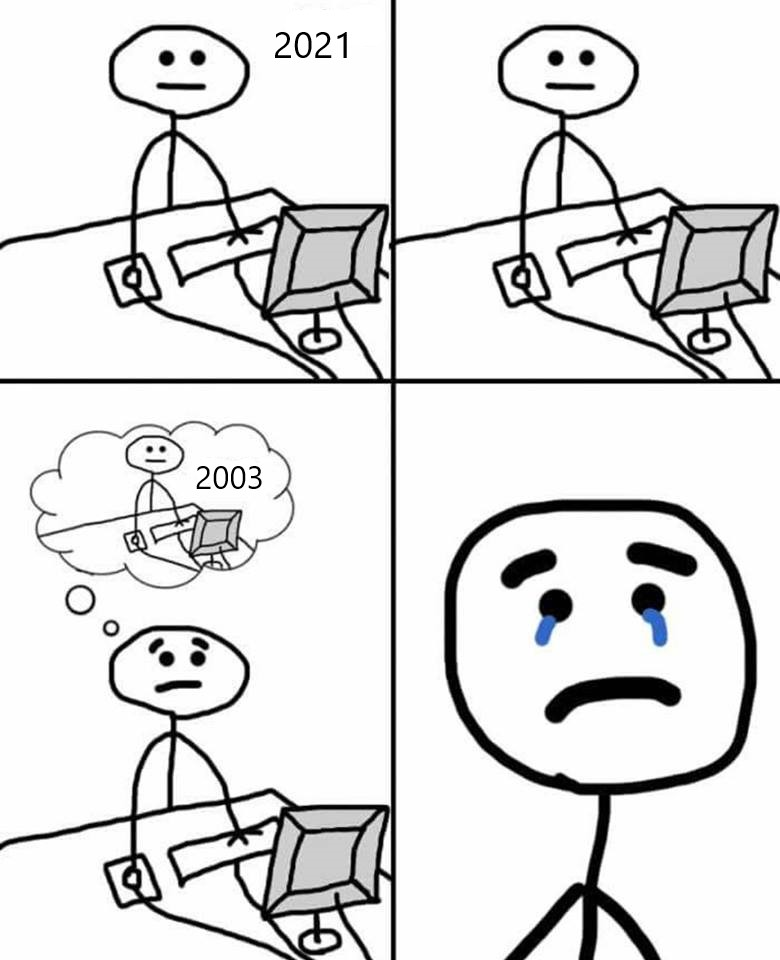
I have a nostalgic love for the Classic Internet™, before the barrier of entry to uploading content was accidental posting with your butt (butts used to only be able to dial phone numbers). In the early 00s, sites like Newgrounds, eBaum's World, and YTMND were popular for poorly animated, crudely recorded, lo-fi content. No one questioned why most of it was objectively pretty awful, and definitely distasteful, because the search and being "in the know" was part of the fun.

Mozilla, the company that makes Firefox, decided that the acceptance of low-quality or objectionable content was something worth studying, and I agree (because why not?). There's been a good amount of discussion online about their new-ish extension: RegretsReporter, which allows participants to report YouTube videos that they wish they hadn't watched and why.

This extension/study had people arguing almost immediately (censorship VS harmful content, technology's place in society VS politics, blah blah blah). However, people will argue about literally anything on the Internet, especially if it has an element of crowd-sourced content filtration attached.

Mozilla launched RegretsReporter in 2020, and 37,380 users from 91 countries opted in to volunteer their data, resulting in the largest crowd-sourced research project about the mysterious YouTube algorithm (which generates 700 million hours of watch time every day) to date. The project's first findings report was based on 3,362 flagged videos from July 2020 to May 2021.
Results
So what did Mozilla conclude in their report?
- Most frequent reasons for Regretting a video are misinformation, violent or graphic content, hate speech, spam/scam
- 71% of all Regrets came from recommendations (YouTube's algorithm)
- Recommended videos were 40% more likely to be flagged than direct search results
- Regret rates were 60% higher in countries that didn't have English as a primary language (Brazil, Germany, France were particularly high)
- Regret'd videos acquired 70% more views per day than other videos watched by volunteers
- 43.3% of Regrets were for videos completely unrelated to the previous video the volunteer watched
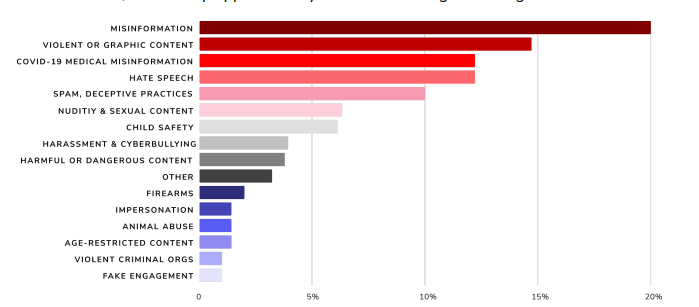
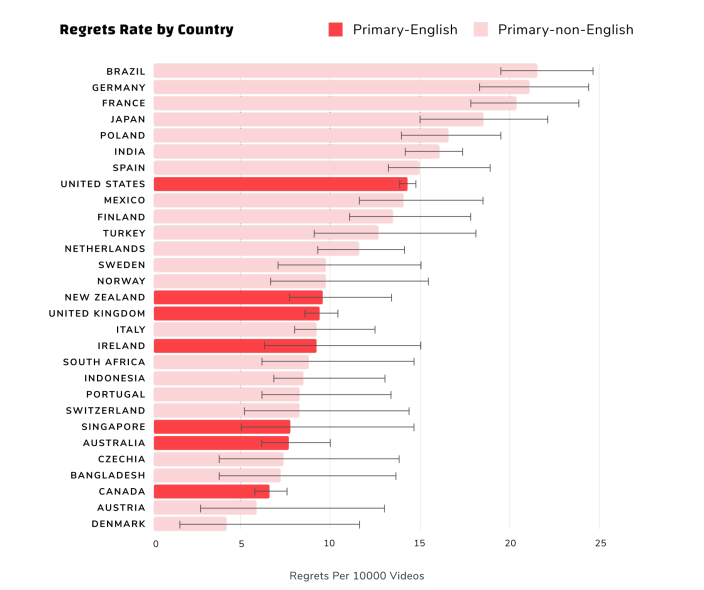
The data is interesting, and I recommend reading the whole report if you're into this sort of thing. Personally, I don't know if it's a problem that can be fixed, or what would be required to fix it while keeping users happy (and not imploding the platform).
Regardless, low quality content on YouTube is clearly a social problem that many people are worried about on a global scale. I wonder where Mozilla's project will go from here. I wonder where YouTube will go from here.