
Pfizer? I barely know her!
Can it be? An effective SARS-CoV-2 vaccine? Maybe, maybe not. Either way, BNT162b2 (the vaccine candidate), has some pretty cool biotechnology behind it.

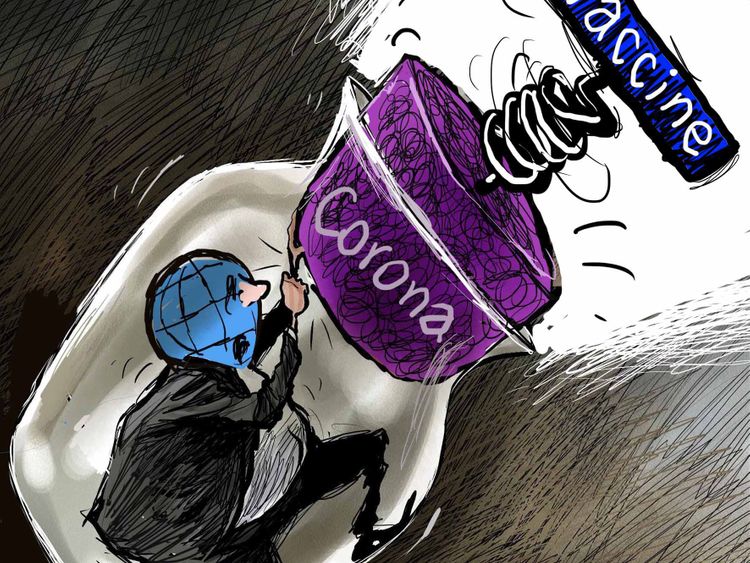
"U.S.-based pharmaceutical giant Pfizer said today an early analysis of its novel coronavirus vaccine trial suggested the vaccine was more than 90 per cent effective in preventing the disease among trial participants who had no evidence of prior coronavirus infection." Trudeau says promising new Pfizer vaccine could be “light at the end of the tunnel.” (2020, November 9). CBC.

Can it be? An effective SARS-CoV-2 vaccine? Maybe, maybe not. Either way, BNT162b2 (the vaccine candidate), has some pretty cool biotechnology behind it. What makes it particularly cool is the lipid nanoparticle delivery mechanism.
But, what does that mean? To understand, I think it's good to know these two major things:
1. The Central Dogma of Genetics
The central dogma of genetics tells us:
- DNA lives in the nucleus. It has two strands for stability, and encodes using a 2-bit system, because all possitibilties can be expressed as 00, 01, 10, or 11. All your genetic information is stored in (most of) your cells, distributed amongst your chromosomes.
- DNA is transcribed by proteins into mRNA (let's call it RNA for simplicity). RNA encodes with a similar 2-bit system, but is single-stranded, and not physically compressed like DNA. However, it is basically a 1:1 single stranded version of the parts of DNA that encode specific amino acid sequences.
- This RNA is transported outside of the nucleus where it gets turned into amino acids. With three RNA units per amino acid, and 20 options for amino acids (64 combinations are possible, but some combinations are redundant so only 20 different amino acids can be produced), this encodes with a 6-bit system to create a shitton of proteins (which range from 35 to 35,000 chained amino acids in size).
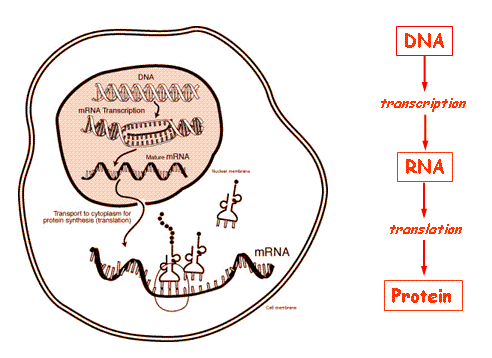
- Proteins are the end-game here, and they effectively make you you.
- Viruses come with their own obnoxious proteins (coronavirus has a "spike" protein).
- The cells of the immune system use a complicated system of signals that lead to
proteins affecting bodily functions, helping special types of immune cells learn how to make more DNA that becomes mRNA that becomes protein that helps cells create the kinds of cells that can find and neutralize infected cells showing the spike protein, stopping the viruses' mechanism of proliferation through the magic ofimmunological memory (cool word, doesn't get enough conversational use).
2. Lipid Nanoparticles for Delivery
Lipid nanoparticles are just tiny (like really tiny) raft-like structures to deliver self-amplifying RNA to your now-long-socially-distanced cells. The RNA in these things encodes the spike protein and actually comes with its own protein that lets the RNA make more copies of itself (self-amplifying).
This is a big advantage over some of the Greatest Hits Vaccines™ (like flu or smallpox) that inject you with a denatured or dead virus, when all you really need is the sweet sweet RNA and a way to make a lot of it (remember, it's single-stranded and unstable). The spike protein on its own doesn't really do anything except reveal the coronavirus's evil plans.

But the question remains... will this work? Does this mean anything? Peer-review, pharmaceutical administrative bodies, our logistical capabilities (it has to be stored at -70°C, let's see how we distribute it to hundreds of millions of people), and time, will tell.
Still, pretty cool, though.
This paper describes this vaccine delivery mechanism:
https://www.nature.com/articles/s41467-020-17409-9.pdf