
Click-Clack


One of my friends found this blog, and shamed me for my high frequency posting. Who goes to someone's website to criticize how often they update it? I've blocked them from here so as not to further taint their internet browsing experience.
The reason I post so much is mostly that I just love typing. aPoplol and a computer keyboard are almost a more classic pairing than Rose Kennedy and a black dress. I have 3 different mechanical keyboards that I love for different reasons, and I can type pretty quickly:
It doesn't really take me all that long to type these things out. That's why I can post a lot. This is particularly true for posts where I'm fabricating the information on the spot, or posting about nothing in particular (99% of my posts).
Keyboards have become almost like another human organ, in a very real way, and face the same evolutionary struggle as one of our other favourite organs: the eye.
The Human Eye: Crappy Design by Fate
Most people know that the human eye has a blindspot, functionally compensated for by the existence of a second eye. You can easily test your own blind spot by closing your left eye, focusing on the + sign and moving your face away from (or toward) the screen until the black circle disappears:
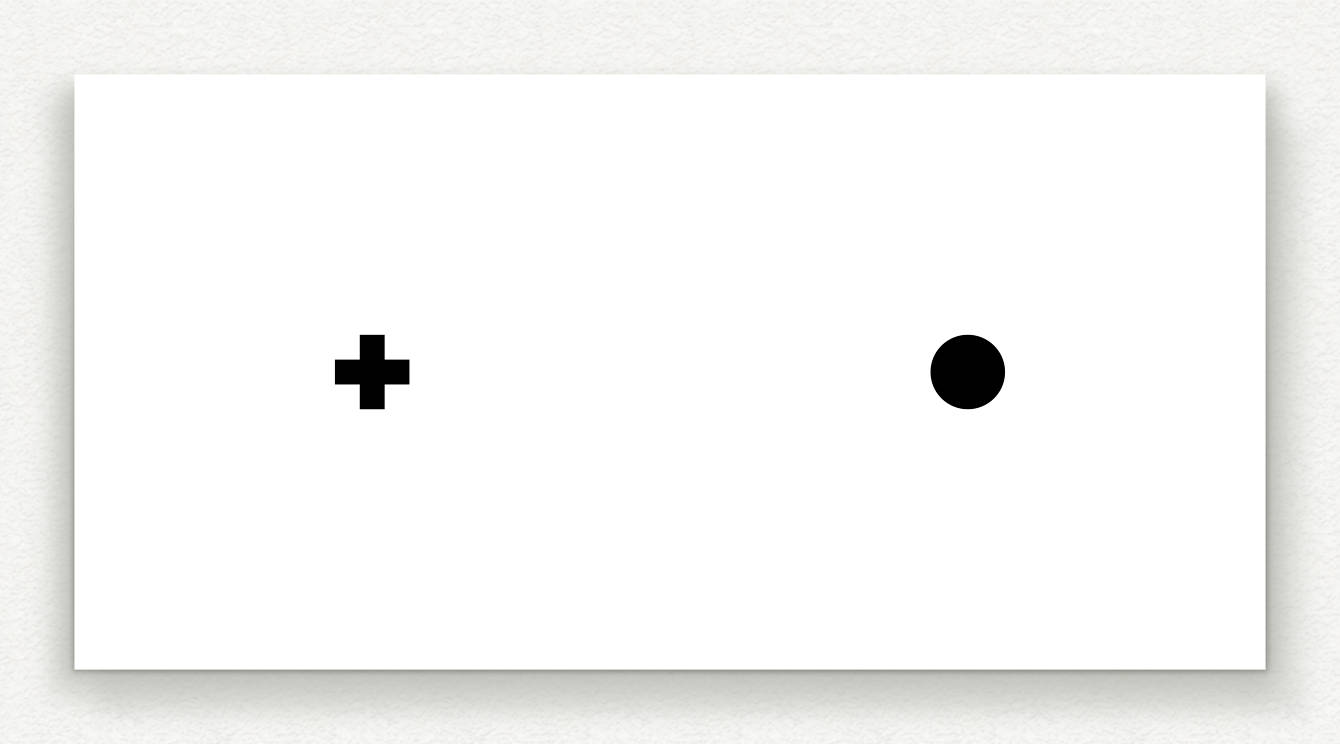
This happens because there's a point on the retina (the part that turns light into brain signals) that the optic nerve (connection of eye to brain) extends from and covers up. No light can pass through this nerve, so you get no vision there. This is different than a cephalopod eye (like in an octopus), where the optic nerve doesn't cover any of the retina, and just connects into the brain from behind the retina.
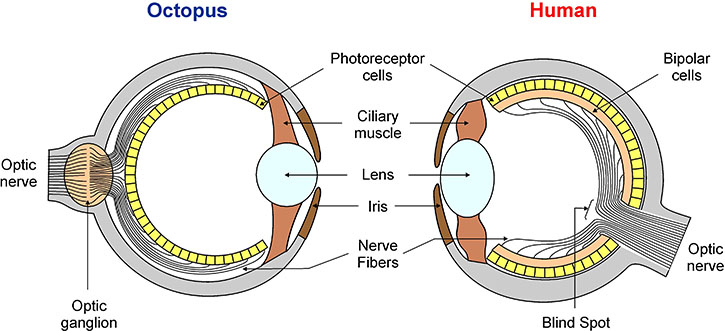
Why does it pass over the retina in humans? Evolution is blind (that's a pun), and has no end goal. Photosensitive (respond to light) cells evolved into an eye at some point, and there was no functional advantage that a better "designed" eye would have, so this is the way it is. Evolution doesn't have to explain herself to you.
The Human Keyboard: Crappy Design by Choice
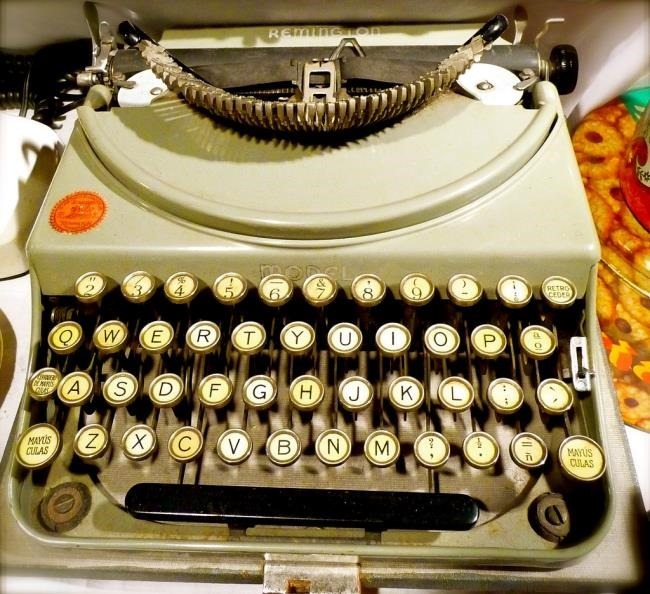
Keyboards share a similar story, except as a product of conscious decisions by humans. The standard keyboard layout you probably have in front of you is QWERTY, named after the first five letters that appear on it (is it MNBVC in Israel?).
This was a carryover from the layout used on typewriters, and became the universal standard following the 1878 release of the Remmington No. 2 typewriter. Since typewriters are mechanical devices, they would jam if two adjacent keys were pressed at around the same time. The QWERTY layout was designed to be the least efficient key layout for English typing, which means universal adoption of almost any other standard would produce faster typists.
In 1936, Dr. August Dvorak patented the "Dvorak Simplified Keyboard" which places all the vowels in the home row for the left hand, and the other most common letters largely accessible to the right. In this age of carpal tunnel and near-constant keyboard usage, it would be preferable from an efficiency and ergonomics standpoint.
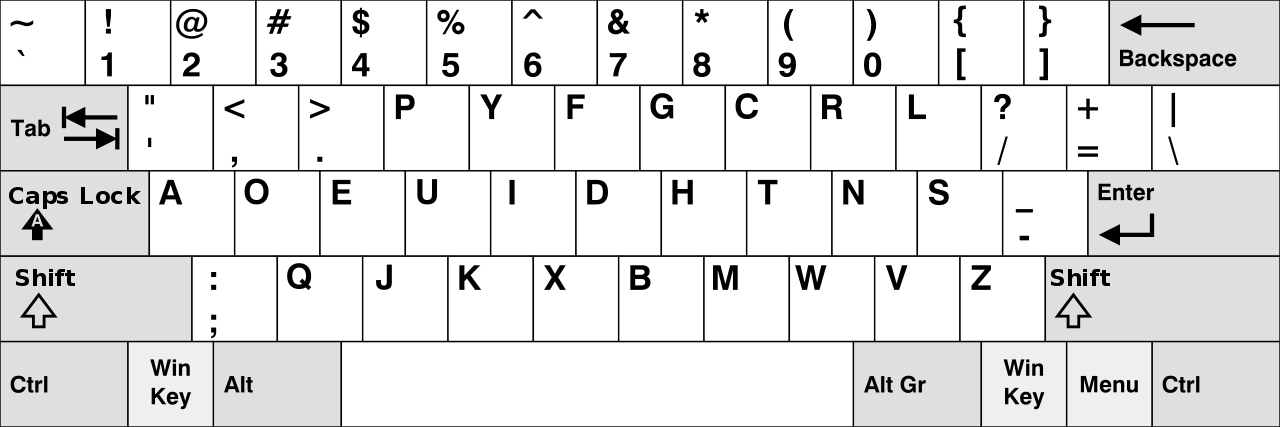
Unfortunately, neither I nor most other normal people want to overwrite years of learning on the QWERTY, and that's unlikely to change anytime soon. QWERTY has even survived the shift to digital keyboards, where spacing between letters is actually pretty useful for things like swipe-typing.
Conclusions
People can barely figure out "Push" and "Pull" on sets of doors they use every day, so I doubt we'll be changing keyboard standards anytime soon. Still, it's cool to think about the parallels between biological and technological evolution and how one influences the other.